





ADSR Live Events, Compression, Live, Music Production Blog
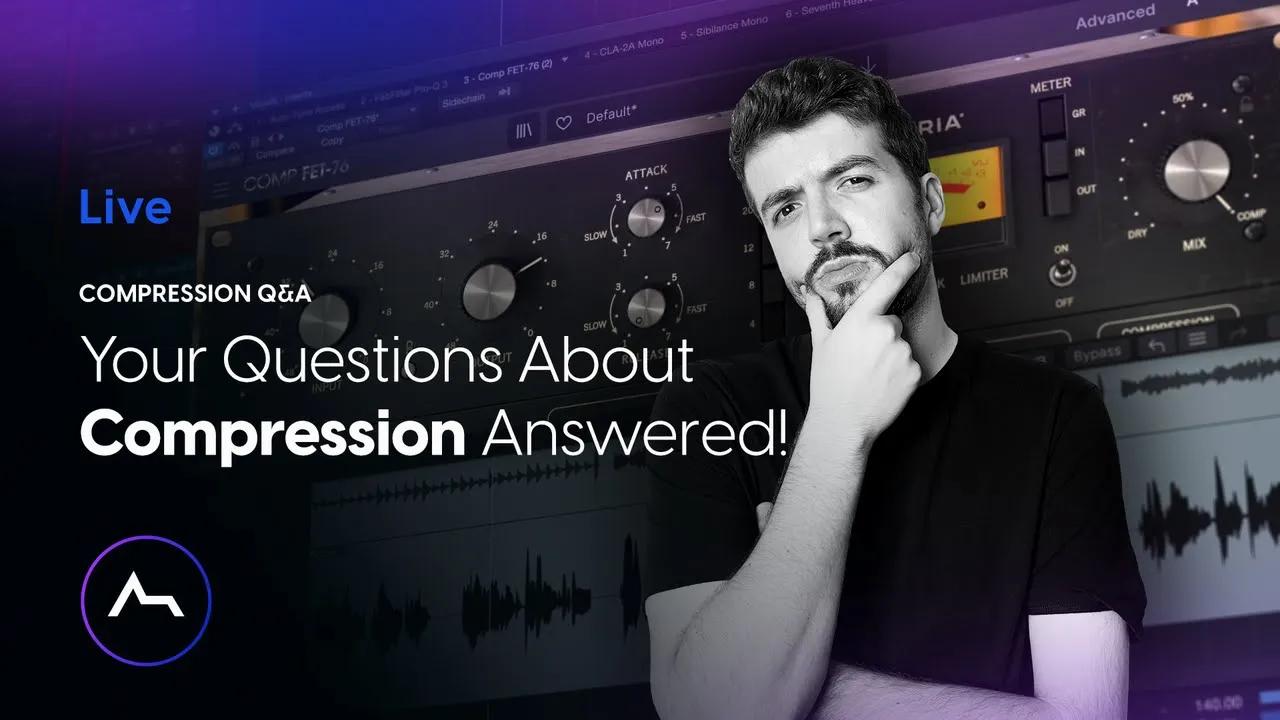
Understanding Audio Compression: From Basics to Advanced Techniques in Music Production + Audio Compression Q&A
Compression is often considered one of the most mystifying aspects of music production, but once understood, it can be a powerful tool for shaping your sound. Many producers find it difficult to grasp at first, but as demonstrated in ADSR’s comprehensive Q&A session, when broken down into simple terms, understanding audio compression becomes much more approachable and practical for producers at any skill level. In this article, we’ll explore the fundamentals, practical applications, and advanced techniques, helping you become a master of compression in your music production process.
For those looking to dive even deeper into audio compression, we also offer a range of in-depth video courses available at this link. If you’re looking for the most comprehensive guide on compression, we highly recommend our popular course, Compression Explained, which will teach you everything you need to know about mastering this essential technique.
The Fundamentals of Audio Compression
At its core, audio compression is a process designed to control the dynamic range of an audio signal. Dynamic range refers to the difference between the loudest and quietest parts of a sound. Compression helps keep the loud parts from overwhelming the quieter ones, ensuring that your tracks remain balanced and clear. The real magic of compression lies in its ability to reduce the peaks of an audio signal while allowing the quieter elements to remain more prominent.
For those looking for a variety of compressors to help achieve the perfect sound, we offer a broad range of compressor plugins that can enhance your mixing and production process.
What Is Compression?
Audio compression works by automatically reducing the volume of a signal when it exceeds a predetermined threshold. This results in a more consistent volume level, which is essential for mixing and mastering music. However, the key to using compression effectively is understanding when to use it and, just as importantly, when not to use it.
The Threshold, Ratio, Attack, and Release
To truly understand audio compression, it’s important to familiarize yourself with the basic parameters that control the process:
- Threshold: The level at which compression begins to take effect.
- Ratio: How much compression is applied once the signal passes the threshold (e.g., a 4:1 ratio reduces any signal above the threshold by 4 dB for every 1 dB above it).
- Attack: How quickly the compressor reacts once the signal exceeds the threshold.
Release: How quickly the compressor stops affecting the signal once it falls back below the threshold.
By adjusting these parameters, you can shape the sound to fit your musical vision. Understanding these fundamental controls is key to mastering audio compression.
Pre-Treated Samples vs. Raw Audio
One of the most common mistakes many producers make is automatically applying compression to every track in their mix. It’s important to evaluate each track before applying compression. Modern sample packs often come pre-treated with compression, which means additional processing may not always be necessary.
Before reaching for a compressor, always ask yourself the following questions:
- Is this sample already processed? Many professionally recorded or sampled sounds have been compressed already.
- Does this track actually need compression? Sometimes, the natural dynamics of a sample or instrument may not require additional compression.
- Would bus compression be more appropriate? Instead of compressing individual tracks, you might want to consider applying compression to a bus or group of tracks that share similar characteristics.
By thinking critically about whether each element truly needs compression, you can avoid unnecessary processing and maintain a more natural mix.
Practical Applications of Compression
Vocal Compression
Vocals are one of the most dynamic elements in any song, often requiring a fair amount of compression to keep them present and controlled. Here’s a proven approach for vocal compression:
- Start with a FET-style compressor (e.g., 1176): FET compressors are known for their fast attack times, making them ideal for controlling vocals that need to be upfront and consistent. For more compressor options, check out our selection of compressor plugins.
- Use parallel compression techniques: By blending the compressed signal with the uncompressed signal, you can preserve the natural dynamics while adding controlled thickness to the sound.
- Blend the compressed signal: Don’t overdo it. The goal is to enhance the vocals without making them sound unnatural.
- Remember the “5-10% less” rule: Once you find a setting that sounds perfect, dial it back just slightly. This prevents over-compression, which can make vocals sound flat or lifeless.
Bus Compression for Cohesion
When working with multiple tracks that should sound like a cohesive element (e.g., drum samples), bus compression is an invaluable tool. It can help:
- Create a cohesive sound across all the elements in a group, such as drums or backing vocals.
- Glue different elements together, ensuring they complement each other in terms of dynamics.
- Maintain the individual character of each sample while providing overall control of dynamics.
This technique helps you maintain the integrity of individual sounds while ensuring that the group of sounds as a whole feels unified. Our range of compressor plugins can assist in fine-tuning bus compression for the perfect balance.
Advanced Compression Techniques
Multi-band Compression
For more precise control over specific frequency ranges, multi-band compression is an advanced technique worth exploring. By splitting the signal into different frequency bands, you can apply different compression settings to each band. This is particularly useful when you need to:
- Control harsh frequencies in instruments like guitars or synths without affecting the overall sound.
- Manage complex frequency content, especially when working with dense mixes.
- Treat specific parts of the frequency spectrum independently, allowing for more detailed control over the mix.
Mid-Side Compression
Mid-side compression is a powerful technique for those working on complex mixes. It allows you to separately process the center (mono) and side (stereo) elements of a track. This technique is particularly useful in mastering, where it helps to:
- Control the dynamics of the center (mono) content, such as vocals and bass.
- Shape the stereo image by applying compression to the side content (e.g., panned instruments, reverb tails).
When done correctly, mid-side compression allows for a more polished and balanced final mix. Our compressor plugins include options to make mid-side processing easy and effective.
Best Practices and Tips for Effective Compression
Use Your Eyes and Ears
While the visual feedback provided by compression meters can be helpful, it’s essential not to rely on them entirely. Mix with your ears, not just your eyes. Listen critically to how the compression is affecting the sound, and trust your instincts. Visual aids are tools, but your ears should always be your primary guide.
Parallel Processing
Parallel compression is an excellent way to blend the aggressive dynamics control of compression with the natural sound of the original signal. Here’s how to do it effectively:
- Start with extreme compression settings: Apply heavy compression to a duplicate of the track.
- Blend back to taste: Gradually mix the compressed signal with the original, adjusting the level to suit the track’s needs.
- Use the “less is more” approach: It’s easy to get carried away with extreme settings, but subtle adjustments often yield the best results.
Multiple Compressors for Different Purposes
Sometimes, it’s beneficial to use multiple compressors on the same track for different reasons:
- Character and tone: A vintage-style compressor might add warmth, while a more modern compressor controls peaks.
- Technical control: Using one compressor for general level control and another for tighter dynamics can be effective.
- Frequency-specific treatment: Multi-band or EQ-based compression can focus on specific frequency areas without affecting the entire signal.
For all these needs, we offer a wide range of compressor plugins that allow for specialized control over every element in your mix.
Common Pitfalls to Avoid
Even experienced producers make mistakes when it comes to compression. Here are some common pitfalls to avoid:
- Over-compression: Using too much compression can squash the life out of your mix. It’s essential to find the right balance.
- Applying compression without purpose: Don’t use compression just for the sake of it. Every compression decision should serve the sound.
- Not considering the source material: Make sure the sound you’re compressing actually needs compression.
- Ignoring gain staging: Incorrect gain staging before and after compression can lead to distortion and poor sound quality.
- Using the same compression approach for everything: Each track is unique and may require different compression techniques.
Conclusion
Compression doesn’t have to be intimidating. By understanding the basics of audio compression and gradually incorporating more advanced techniques, you can develop a natural intuition for when and how to use it effectively. Remember that the goal isn’t to compress everything, but to enhance your music in a way that supports its emotional and sonic impact.
Further Learning
Explore these essential tutorials for even deeper insights into mastering compression:
- Compression Q&A: Your Questions About Compression Answered – A detailed Q&A session addressing common queries about compression.
- Introduction to Compression Explained – A beginner-friendly breakdown of the basics of compression.
- Why Do Compressors Have Knees? – An exploration of the knee parameter and its effect on compression.
- Master Sidechain Compression in 15 Minutes – Learn how to use sidechain compression in just 15 minutes.
- 5 Compression Mistakes to Avoid – A guide to the most common mistakes and how to avoid them.
- Compression Pro Tip: Compressing in Stages – Tips for using multiple compressors for more refined control.
- Do Compressors Really Color Your Sound? – An analysis of how and why compressors may or may not affect the tone of your sound.
- 10 Essential Tips for Compression – A compilation of the most essential tips to improve your compression techniques.
 Cherry Audio DreamSynth Review – Creating an Entire Beat Using Only DreamSynth31 Mar 2022
 Sound Design 101 – Brent March Explains Synth Terminology, Oscillators, Filters & Envelopes3 Mar 2022
 Ableton Wavetable: The Most Underrated Synth in Ableton Live22 Dec 2021
 Roland TB-303 vs TT-303 vs TB-3 vs TB-03: A Comprehensive Comparison of a Classic3 Mar 2025
 38 Game-Changing Music Production Tips Every Producer Should Know28 Feb 2025

MAKE BETTER MUSIC
Subscribe to  YOUTUBE
Join 311,000+ music producers & get new tutorials daily!
Cherry Audio DreamSynth Review – Creating an Entire Beat Using Only DreamSynth31 Mar 2022Sound Design 101 – Brent March Explains Synth Terminology, Oscillators, Filters & Envelopes3 Mar 2022Ableton Wavetable: The Most Underrated Synth in Ableton Live22 Dec 2021Roland TB-303 vs TT-303 vs TB-3 vs TB-03: A Comprehensive Comparison of a Classic3 Mar 202538 Game-Changing Music Production Tips Every Producer Should Know28 Feb 2025